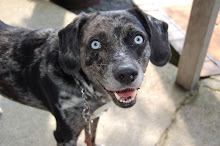
Walking on the New River Trail one day, my family and I saw something of an exotic visitor standing in the water.
As a heron stood still in the water of Chestnut Creek, my father, a frequent visitor to Virginia himself, remarked that he believed that this sighting says something about the loss of wetland habitat, the bird's preferred hunting lands.
Since then, the Twin Counties has been visited by a rufous hummingbird and an eastern towhee. Both caused great stirs among the local birdwatching community.
Folks indicated to me that these birds being spotted here is even more extraordinary because the rufous normally lives in the Pacific Northwest and the towhee in the West and Mexico.
It's reasonable to wonder why these creatures would be flying so far out of their normal range to perch, at least for a while, on the boughs and branches of the Twin Counties.
And the Audubon Society offered a possible explanation in an alarming news release on June 14.
A survey of common birds by the nature-watchers found a "nosedive" in their populations over the last 40 years, as much as 80 percent for some species.
Audubon complied a list of 20 common birds in decline, each of which have seen a 54 percent or greater population loss.
"These are not rare or exotic birds we're talking about — these are the birds that visit our feeders and congregate at nearby lakes and seashores and yet they are disappearing day by day," Audubon Chairperson and former EPA Administrator, Carol Browner is quoted in the news release. "Their decline tells us we have serious work to do, from protecting local habitats to addressing the huge threats from global warming."
Included on the list are the Northern Bobwhite, the Evening Grosbeaks, Eastern Meadowlarks, Whip-poor-wills, Little Blue Herons and Rufous hummingbirds.
"Rufous Hummingbird populations have declined 58 percent as a result of the loss of forest habitat to logging and development, in both their breeding range in the Pacific Northwest and their wintering sites in Mexico," Audubon officials said.
"Little Blue Herons now number 150,000 in the U.S. and 110,000 in Mexico, down 54 percent in the U.S.," the release said. "Their decline is driven by wetland loss from development and degradation of water quality, which limits their food supply. "
Listed as Virginia birds in decline are the Northern Bobwhite, the Loggerhead Shrike, Eastern Meadowlark, the Field Sparrow, the Rusty Blackbird and the American Black Duck.
Each species is beset by development pressures that destroy the necessary habitat for the bird's survival and compounded by worldwide environmental threats like global warming.
Audubon officials point out that these common birds are not in immediate danger of extinction, but they hoped that public awareness would lead people to stem the tide of population loss and its causation.
"Audubon leaders hope the multiple threats to the birds people know will prompt individuals to take multiple actions, both locally and directed toward state and national policies," the news release said.
"Fortunately, people¹s actions can still make a difference," Audubon's Greg Butcher is quoted. "Average citizens can change the fate of these birds just as average citizens helped us confirm the trouble they face."
More information is available at the organization's Web site, www.audubon.org, on how to help keep common birds common and the environment healthy.
• First published March 2008.
Sunday, February 1, 2009


Thursday, January 29, 2009
Update: New lighting's darkside
The mercury in compact fluorescent bulbs only amounts to a trace, the Environmental Protection Agency said in a move to calm fears about the pollution potential of the new lighting.
More people are finding out they need to take care when disposing of a CFL (or if one might break) because of the mercury it contains.
Mercury can be hazardous to people. Improper disposal could lead to contamination.
But EPA officials responding to a citizen's question sent out a news release on the question, assuring people that the significant energy savings makes it worth it to use CFLs instead of incandescent bulbs.
Compact fluorescents typically use 75 percent less energy and last 10 times longer than the kind of bulb it's replacing.
The mercury in a CFL is only a trace amount, about five milligrams, the EPA's Dan Gallo, an electronics recycling specialist, responded the citizen's question about disposal. This amount "would cover the tip of a ballpoint pen.
"It would take 100 CFLs to equal the amount of mercury contained in older thermometers, which is about 500 milligrams."
Several retailers have stepped up to facilitate proper disposal of CFLs, the EPA official adds. Home Depot, IKEA and Ace Hardware will accept these bulbs for recycling, and Wal-Mart has started a similar pilot program in Richmond, Va., which may mean widespread CFL relief is on the way.
Some precautions need to be taken if a CFL is broken. Gallo said get everyone out of the room and open windows to air it out for 15 minutes.
The bulbs — with safe handling, of course — are by far more beneficial than harmful, the EPA indicated.
"Since CFLs use 75 percent less energy than traditional incandescent light bulbs, if every American switched one incandescent bulb to a CFL, it would save more than $600 million in annual energy costs and prevent greenhouse gases equivalent to the emissions from 800,000 cars," the release said.
More tips can be found at:
http://www.epa.gov/osw/hazard/wastetypes/universal/lamps/index.htm
http://www.epa.gov/osw/hazard/wastetypes/universal/lamps/faqs.htm
Monday, January 26, 2009
Keep them grounded
Think about it: Do you really want all the yahoos who cause all those close calls on the roads everyday (including myself) swooping along in an aircar, a threat to life in the skies as well as on the ground?
After many years of trial and error, it looks like hybrid cars and planes are on the verge of becoming a reality, now that a company called Terrafugia has developed the Transition.
Company representatives told Discovery News that the two-seat vehicle is both road- and airworthy with the inclusion of wings that are folded up on the ground but snap into place for air travel.
As for myself, I feel torn about that announcement — torn between the fantasy of an ordinary individual like myself being able to take to the skies at will and the possible reality of traffic jams and demolition derbies moving from the earth into the realm of the air.
I mean, really, think about all the distracted cell-phone-talking, and sometimes cell-phone-texting, burger-eating, scenery-gawking, travel-weary people who barely miss us on the road each day with their land-bound, two-ton ball of hurtling death? Do we truly feel the need to give them the opportunity to crash their vehicles into the roofs of our houses now?
I don't.
So, nothing personal against the inventive innovators at Terrafugia, I want to be the first to go on record against this particular kind of progress.
Here's my reasoning:
• Vote of no confidence
Probably the most compelling argument against drivers becoming fliers are the drivers. They provide more than enough anecdotal evidence to prove people shouldn't have aircars.
Soon after I moved to the Blue Ridge Mountains years ago, I invited friends from my hometown down to visit.
Unfortunately, one of the most vivid memories my friends have was of this decrepit little old gray-headed lady somehow managing not to get killed when she tested their brakes by pulling right out in front of their van in Carroll County and then her getting lucky again when they witnessed a tractor-trailer that barely avoided the same grizzled motorist the next day in Galax.
To this day, my friends still ask me about an old woman hazardously careening around the Twin Counties in a little blue Ford.
God wouldn't even be her co-pilot.
I'm sure that everybody could come up with an example of a driver that would fill them with absolute dread should they have access to a flying car.
• Can't trust it
The one thing you can be certain of in mechanical devices is that eventually they will become an inert piece of non-functioning matter upon which you will regret spending the initial capital investment of $71,685 to get, Hummer owners.
Difficulties such as running out of gas on the ground are often no big deal, but running out of aircar fuel over the deserts of Arizona? Now you're talking vehicle trouble.
And while I'm sure that everybody's favorite pilot, C.B. Sullenberger from U.S. Airways Flight 1549, wouldn't have any trouble gliding a Transition in for a powerless emergency landing over Topeka, I suspect few individuals can match the impressive talents of Sullenberger.
• More snarge, anyone?
Speaking of Flight 1549, birds would no doubt be on the losing end of widespread public availability of a "GM Strafe" air sedan.
When bird strikes occasionally blind pilots by becoming blobs (or snarge) on windscreens or blow out jet engines — besides being not so good for the avian creatures — that incident could be potentially fatal for whoever's inside the flying machine as well as a great many innocent bystanders along its flight path.
Put more people in the air, especially in craft that depend on jet propulsion... well, it won't just be Canadian geese that go splat.
I know that there can be happy conclusions to those sorts of things, but to underscore what I think about that, please review the preceding comment about the mad skills of pilot Sullenberger.
• The safest way?
Air travel may be the safest way to get there, but that's only because its practitioners aren't flying by the seats of their pants.
I enjoyed "The Jetsons" cartoon as a child, but I have reason to hope that the travel of the future won't be too Jetsonian.
A flying motorist won't be able to merge into dense traffic in a way that resembles a game of air bumper cars, like an irritated George does on the TV screen.
Air transportation is safer exactly because there are fewer vehicles in the sky than on the ground, and if we expect it to stay that way, we need to keep most motorists grounded.
Sure, it appears that there are real advantages to Terrafugia's Transition, like the 500 miles you could travel on a tank of unleaded gas.
Thankfully, though, this particular aircar is going to be out of reach for most people at $194,000.
Anyway, the flying car is so the 1950's vision of the future.
Can't we just skip the experimental-hybrid-aircraft-plummeting-to-earth phase of transportation and jump straight to the breaking-things-down-to-their-molecules-and-beaming-them-from-point A-to-point B-at-the-speed-of-light eureka moment?
Nothing could possibly go wrong with that.
Next week: Jousting at wind turbines.
Tuesday, January 20, 2009
Up in the air
Like many news watchers, I found it thrilling that the pilot of U.S. Airways Flight 1549 was able to protect his passengers and spare the 9-11-haunted city of New York from another aircraft-related tragedy.
Pilot C.B. Sullenberger earned widespread praise for his masterful handling in landing the disabled Airbus A320 in the Hudson River without a single casualty after reporting the plane suffered a double-bird strike.
Quick thinking ferry and tugboat captains also contributed to the fortunate result by wasting no time in moving their vessels in to collect the 155 passengers off the wings of the sinking plane.
The excitement and enthusiasm by the major news agencies to praise a new popular hero in a time when most topics have been dismal, depressing or worse clearly showed.
Given the happy outcome, giddy and relieved reporters on NPR laughed about the work undertaken National Transportation Safety Board to confirm whether it was a bird strike that caused the planes problems, particularly about the new word they learned: Snarge.
You heard it right — snarge. It basically means the residue from the living creature left over after a vehicle/bird collision.
A smear of blood and guts, in other words, as well as feathers and whatever else may survive passing through a jet engine or smacking the windscreen at 100 mph.
Lots of bird-plane collisions occur, but because planes are built to withstand such incidents and because that it usually only becomes a problem if a pilot's sight is obstructed or unless it knocks an engine out, it doesn't often rise to the level of high drama as the one last week in New York.
Thanks to enterprising reporters, lots of information about aviation safety and bird strikes have emerged in the last week.
It's being said that a bird strike happens to about one in every 10,000 flights.
The Associated Press, after flippantly saying this bird (or these birds) won this time by taking down the Airbus, quoted University of Dayton researcher Kevin Poormon in that bird strikes have caused 200 fatalities in the last 20 years with a total of 5,000 impacts reported each year.
"Aircraft are being struck every day by birds," he told AP. "The reason you don't hear about them so much is they are designed to take these impacts. But once you get to large flocks or large birds striking at a critical moment, that's where these events hit the news."
An MSNBC article offered more details on the frequency of bird strikes, noting a quadrupling of the incidents from 1990 to 2007, when the numbers rose from 1,738 per year to 7,439, causing "3,094 precautionary landings, 1,442 aborted takeoffs, 312 engine shutdowns and 1,162 minor negative effects," based on information from the Federal Aviation Administration.
Such collisions are most likely to occur at low altitudes, as when a plane is taking off or landing.
The researcher that MSNBC asked about the increase, Richard A. Dolbeer, a retired ornithologist with the Department of Agriculture at the Wildlife Services in Sandusky, Ohio, explained the phenomenon is a result of better environmental practices.
Populations of larger birds that cause the most damage to engines, like great blue heron, osprey, snow goose and Canada goose have rebounded in the years since the U.S. passed the Clean Water Act and outlawed the pesticide known as DDT.
It also seems like an increasing number of flights or the birds being pushed into areas that are less desirable because development is crowding them out of their element might also be factors in this safety issue, but I'm just a layman.
The conventional wisdom is that flying is the safest way to travel, and as proven last week by Sullenberger — a gifted practitioner in his profession — a few pilots have the skills to turn what could be a massive calamity into a safety triumph.
The National Aircraft Controllers Association reports that there are 87,000 flights in the air each day, about 30,000 being commercial airliners. It's too much to hope for that each and every one has a pilot aboard as talented as Sullenberger.
When it comes to safety, keep in mind that flights originate out of airports where planners can exert control over safety issues and take corrective action against more bird strikes happening, forensic bird identification scientist and snarge expert Carla Dove pointed out to NPR. Identifying the bird helps planners avoid future incidents by letting them understand the species' behavior and showing them what they need to prepare for.
What's needed occasionally may be as simple as cutting the grass to prevent birds from taking cover there, or maybe moving a pond that might be attractive to waterfowl.
"If you think about pest management, and that's really what this is, it's like a safety issue," she told NPR. "You can't really do anything about the problem until you know what the species that's causing the problem is."
Experts acknowledge, though, that they can't control every variable in birds versus airplane troubles.
So it seems logical to conclude that an increasing number of airplanes in the skies alongside more birds means more problems in the air, more opportunities for strikes to cause an engine flame out.
So what's that mean for the vaunted dream of personal flight? The idea that everyone who needs to get from point A to point B will do so in a personal jet or air car?
Stay tuned for next week's column to look at more closely at human technology-bird conflicts.
Tuesday, January 13, 2009
Pet peeve 2009 edition
I once thought that it was ethically wrong to use my position at a newspaper as a bully pulpit, as Teddy Roosevelt used to refer to taking advantage of his power to promote his own agenda.
But I've come to realize that everybody has a bully pulpit of their own. Or if not, at least access to such a forum in terms of blogs and comments boards on the Internet, or something otherwise.
It even might be a keg of nails in a country store that a good conversationalist draws up to sit on.
So I've loosened up and now I'm quite willing to talk about the admittedly little things that bother me here at the outset of 2009.
They don't really all rise to the level of pet peeve. A good example of which could be a young person tailgating me on a curvy road close enough for me to see him texting on his cell phone. But they are annoyances that I'd like to see stop in the coming year.
• And the Escalade you rode in on
Ever since I started driving, I've always considered my speed as just right and anyone passing me as too fast.
I formed that opinion behind the wheel before you could say "reckless endangerment," back in the day before I developed a healthy respect for the destructive power of an automobile.
So at that time, anybody passing me was actually going too fast, as was I.
With my family onboard, I am no longer trying to break land speed records — especially on interstates slicked with rain and temperatures hovering around freezing.
I've made my Christmas trek many times before, but never with rain falling during 300 miles of it.
Did it help that we saw lots of flashing emergency lights on the other side of the highway in Louisville and an Explorer in the median where one side had been shredded and the other side appeared almost normal? No, not really.
There were times when I almost got down to 45 mph and some traffic in the fast lane probably continued to go 80. At any time I expected to do a 360 and spin off road or into the path of a speeding tractor-trailer that couldn't slow down in time.
It makes me want to have technology that will let a driver communicate with any other vehicle in close proximity, so I can tell them what I think about their ability to operate a horseless carriage and the mental capacity and perceptive abilities of any DMV official who would allow them to do so.
Actually, I wouldn't try to be mean — more like a protective adult trying to tell a 3-year-old with two left feet not to run with upturned scissors on one hand and a primed grenade in the other.
• Slight sight distance
Closer to home, it sometimes seems that I've gotten my boyhood wish to own a car that operates in stealth mode, cloaked from the vision of other drivers.
In reality, though, Chevy Cavaliers don't usually merit that kind of expensive feature, so I have to conclude that something else is going on when many motorists continue to pull out in front of me in what I deem insufficiently safe distances on U.S. 58 in Carroll County.
I realize that 58 west of Hillsville is a four-lane road, but that doesn't guarantee I'll be able to zoom to the left every time to avoid their puttering ways.
Maybe I'm wrong, anonymous drivers — maybe you are not distracted like I think you are and can in fact see me and also see there's no other traffic to impede me from getting out of your path.
But if that's the case, you need to wait for me to go by and then pull out.
So, please, help me spare my brakes by showing a little patience before you enter the highway.
• Lingering stuff
It's probably been three years since I've voluntarily accepted all my retail goods in a plastic grocery bags when leaving a store.
That said, I can't quite figure out why I still have hundreds of the darn things.
Maybe it's because of the limited amount of reuse they have. Previously I had figured out they could be used as liners for my small wastebaskets, plus as trash bags in the car.
But I've only stumbled upon one extra reuse for plastic grocery bags ever since — scarecrow.
Having seen a neighbor grow a large enough garden to draw the interest of our deer population, it became apparent that person had taken advantage of an innovation to allow for a good harvest of beets and carrots safe from animal predation.
Besides pie pans, that person merely put up plastic bags to rustle in the wind. It worked incredibly well.
Now my fledgling apple trees are protected, too. It's a little unsightly, but that's a price I'm willing to pay for fresh fruit and vegetables.
I guess it's a good idea to continue to use the plastic bags sparingly, so I will still have a supply when a luxury tax gets applied to shopping bags that are not recyclable.
• Depth charge
As everybody who's not "off the grid" in the Twin Counties knows, local electric utility rates have gone up significantly.
A lot of people say their bill has doubled. Not quite, I think. Looking at the "average daily cost" for electricity figured on my bill, it's up to $5.34, where it used to be about $3.
I had feared that about a dollar of that daily cost was going towards my rechargeable items — my shaver, my handheld vacuum cleaner and of course my cell phone.
My wife doesn't care if I shave, so I've unplugged that personal grooming tool.
I'm not instantly ready to sweep up small messes any longer, after I disconnected my vacuum from the wall socket.
My one remaining device that sucks up wattage is an aging cell phone, which I depend on for communication with the outside world. After about 30 minutes of talk time, the thing's almost dead and needs more charging time, a victim of unimpressive battery life.
With the increase in rates and the need to be charged more often, my phone still may be costing me a dollar a day to operate.
In the short term, I'm looking forward to replacing my phone. No wonder billions end up in landfills a year (though I will give mine to a young man who has a recycling business).
I'm kind of envious of the person out there who will invent the better battery, because that person will make millions.
Well, that's all my bugaboos for now.
I resolve to wait until 2010 before I unleash any more complaining about my pet peeves.
Keep digging in
In hopes of keeping my brain fertile this winter, I've been imagining a new landscape coming this spring.
Though the New Year has just turned as I write this, I just broke a sweat walking the dog. The unseasonable weather is freakish, but still serviceable for digging out much of one new garden area today.
Even so, the periods of light are short, and I can stay mentally active while the sun's down by researching the varieties of flowers, shrubs and trees that will benefit wildlife that fly by the yard in the months and years that I'm here, and hopefully beyond.
My education actually started with warm-weather walks in the Crooked Creek Wildlife Management Area and its success in drawing birds and bugs.
A few of the flowers and trees were unmistakable, like the probably naturally-occurring trillium and the dogwoods, but others escaped my knowledge of flora.
So I decided to look up Crooked Creek on the Internet to see if there were a planting legend to go by.
Sure enough, some clicking around led to recommended plantings for birds and several game animals.
Through "habitat," I arrived at the plant materials page, which gives tips for both the uplands and the wetlands of Virginia. It gives helpful information about where to get the stuff.
Apparently for landowners with larger tracts to develop into habitat, the site recommended some suitable varieties that I wouldn't have thought of, as well as some old standbys.
The plants big bluestem and little bluestem and indiangrass as well as kousa, red osier and silky dogwoods, persimmons, indigobush and crapapple all rang familiar. These same varieties went into the Devils Den Nature Preserve to attract wildlife and wildlife watchers to the Fancy Gap area.
The site also suggested plants less familiar to me, like chokeberry and chokecherry, chickasaw plum, roselow sargent crabapple, eastern gammagrass, birdsfoot trefoil, hazelnut and more.
It listed a couple of viburnums, arrowwood and blackhaw, which is good, because I'd seen a few at nurseries around here and had been on the fence about them.
Food plot species include wheat, rapeseed, proso and browntop millet, buckwheat and of course black oilseed sunflowers.
The Department of Game and Inland Fisheries’ pages list the expected benefits to wildlife, and I intend to sow those that provide food and shelter for songbirds.
Other links connected me to Web pages and files with more information.
It's gratifying to see so many suggestions from the Backyard Conservation worksheet already in my yard.
Providence (or previous owners) have supplied cherry, walnut, dogwood, redbud, sassafras and oak trees, bittersweet, Virginia creeper and grape and milkweed and clover and violets either here or as close as the fence row.
To these, I've added aster, butterfly bushes, butterfly weed, coneflower, bee balm, phlox and salvia and hollies.
I strive to use native plants, because those are better able to survive with just rainfall and little extra watering. An effort to cross-reference these suggestions led me to the native plant database at www.wildflower.org — a new discovery that's quite helpful.
It was that database that made me realize that spicebush and sassafras are both members of the laurel family and that I've got to have more of both.
Spicebush not only supports birds and butterflies, but can host the eastern tiger swallowtail and the spicebush swallowtail caterpillars. Ditto for sassafras plus the palamedes, a rare find in the mountains of Virginia.
There's plenty more to learn, but at least I can make a list to approach my favorite nurseries to see if they'll have my varieties on hand or if they need to be special-ordered to prepare for spring.
I'd love to be able to install lots of trees, like the eastern cottonwood, which is beneficial for tiger swallowtails, the state bug; the elusive mourning cloak; the more visible brushfoot, the red spotted purple; and monarch-doppleganger known as viceroy. But my small plot will support only so many trees along with planned herb and veggie gardens, too.
The overhead utilities also make shrubs and flowers the more likely choices.
So with my mind's-eye, I'm trying to see shrubs attractively grouped according to size and color aesthetics, covering a gradual slope down the hill that won't grow tall enough to interfere with the overhead lines.
Arrangements seem assured of spicebush and sassafras (with its single-, double- and triple-lobed leaves and gorgeous fall color) with viburnums mixed in.
Holly trees would be a good possibility, with the many berries for food and cover for nesting birds. Clustering the trees could serve as a windbreak, though space is still an issue.
Serviceberries are said to provide year-round food for birds, but are subject to cosmetic diseases and insect problems.
Other questions arise, such as: what should the mix be of deciduous and evergreens to provide year-round cover for the birds? Should I plant sunflowers so that they will loom over my planned herb garden? And can I get it all done in a timely and an orderly way?
Just have to keep digging into my research and be ready to go in May, I guess.
Tuesday, January 6, 2009
Winter ticks away
I first wrote this in 2006, but it's still relevant for 2009, because we're having another unseasonably warm January and no winter at all.
And while warm weather brings its pleasures, there are certain perils, too.
Like one of the few critters on the face of the earth that I hate, a vermin I found crawling up my leg after a Jan. 5 dog walk.
I broke a sweat while briskly walking my dog March 2.
It's of limited interest to readers in the Twin Counties, writing about how much I may perspire, I realize, but bear with me.
As someone who doesn't like warm weather and the damp feeling that comes along with it, I immediately slowed down.
To me, this became a notable event because it's the first time in 2006 I felt overheated in shirt sleeves, despite a nice breeze.
A quick glance at my cell phone confirmed my belief that it is not in fact May yet, no matter what the thermometer reads — 70 degrees!
Signs of spring are all around: Birds take to the trees and to the air, and even when you can't see them, their songs are filling the air; flower stems have started pushing their way out of the soil towards the sun; and insects have already buzzed me in the face.
It's been a very unwinterlike winter, especially January, the warmest on record for our region, and probably for many other places across the region and the world, too, I suspect.
NASA called 2005 the warmest year in a century, and we're not getting 2006 off to a good start.
Twin County orchardists now have to worry about their trees budding and a renewed cold snap nipping them, diminishing their crop early on in the growing season.
As a dog owner, I know I'm going to have ticks crawl up my legs and arms into my hair and stick that thing, whatever its called, through my skin in order to drink my blood.
It's going to happen, no matter what preventative measures I may take.
Anecdotally, I realized the winter hovered in unseasonably warm temperatures from the number of ticks I found on both me and the dog.
At a time I can usually depend on the little buggers to be dead, ticks struck my dog multiple times this season.
November must have set a record for the number of parasites attacking my dog. Probably amounted to a dozen — I lost count and just kept finding them as they continued to get bigger from their blood intake.
The only month we got any relief was December.
I welcome spring, even though I dread the hot, muggy weather.
But even when I'm not overheated, fear of ticks may keep me in a cold sweat.
Subscribe to:
Posts (Atom)